01
Scope check
The supplier reviews whether the product, specification and packaging information is complete enough for the next discussion.
OEM Tissue Buyer Guide
A useful OEM tissue quote request identifies the product format, intended market or use, known tissue specifications, packaging direction, artwork status, quantity range, sample needs and timing context. Buyers do not need every specification to be final, but clearly separating confirmed details from open questions helps the supplier review the project accurately.
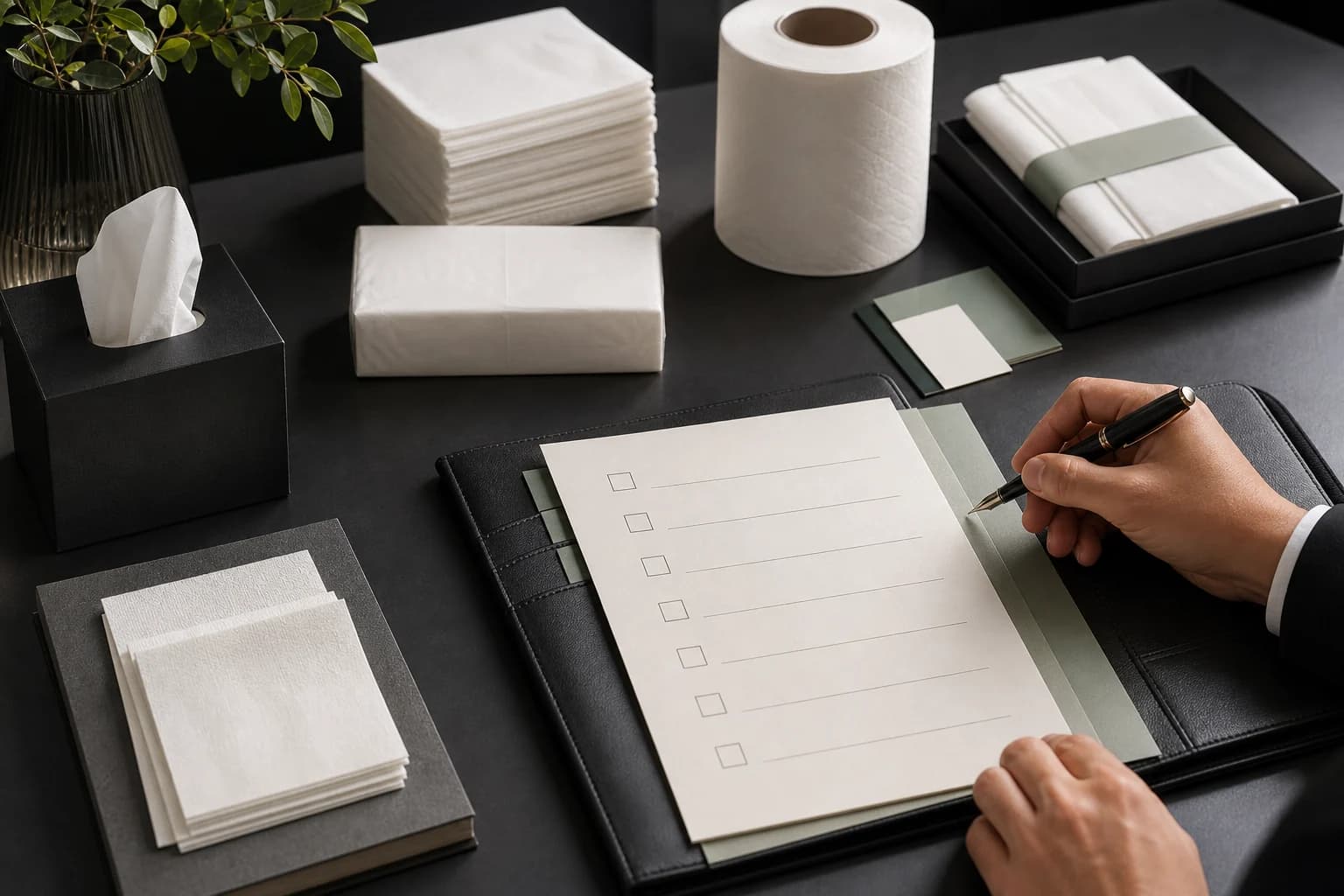
Quote-ready checklist
Send what is already known and clearly mark what still needs review. This keeps the conversation practical without turning assumptions into specifications.
Choose the current category: box facial tissue, pocket tissue, toilet roll or paper napkin. If the format is not final, describe the intended use instead of guessing.
Explain whether the product is intended for retail, hospitality, office, household, travel or another channel, plus the country or market being evaluated.
Share known details such as sheet size, ply, sheet or draw count, material feel, embossing, fold or core requirements. Mark unfinished values as open for review.
Describe the preferred carton, film, wrapper, multipack or outer-carton format and note any print, finish, opening style or carton-mark requirements.
State whether you have final artwork, an editable draft, a logo only or a visual reference. Packaging review is more useful when the available files are identified clearly.
Provide a realistic estimated range rather than asking for a price without volume context. Final commercial terms should follow the reviewed specification and packaging route.
Note whether you need existing samples or a custom sample, when you plan to review the project, and any destination or packing context relevant to the discussion.
After the brief
The purpose of the first review is to identify a practical next step, not to pretend every project follows the same route.
01
The supplier reviews whether the product, specification and packaging information is complete enough for the next discussion.
02
Unconfirmed details are separated from confirmed requirements so neither side treats an assumption as an approved specification.
03
The next step may be an existing sample review, packaging structure discussion, artwork check or a more detailed project brief.
04
Pricing can be reviewed against the agreed product direction, packaging route and quantity context instead of a generic product name alone.
Buyer questions
No. Share the specifications you have and label the remaining items as open questions. A clear draft brief is more useful than presenting guessed values as final requirements.
Yes. You can first discuss packaging format, structure, printing direction and available brand assets. Final artwork review can follow after the product and packaging direction is clearer.
Product and packaging routes depend on project context. A quantity range helps the supplier review an appropriate direction without publishing or assuming a fixed minimum order for every project.
Share clear photos or a physical sample if available, explain which features you want to match or change, and add the intended market, packaging direction and quantity range.
Next sourcing step
Send the product direction, packaging needs, quantity range and open questions you already have. TISVEN can use that context to review the next OEM discussion.