Tissue Specification Comparison
GSM vs Ply: What Tissue Buyers Should Compare
Direct answer
GSM and ply answer different questions. GSM means grams per square metre and records mass per unit area; ply records how many tissue layers form the finished sheet. Neither field alone confirms thickness, softness, strength or absorbency. Record both, then compare sheet size, material, embossing and finished product format.
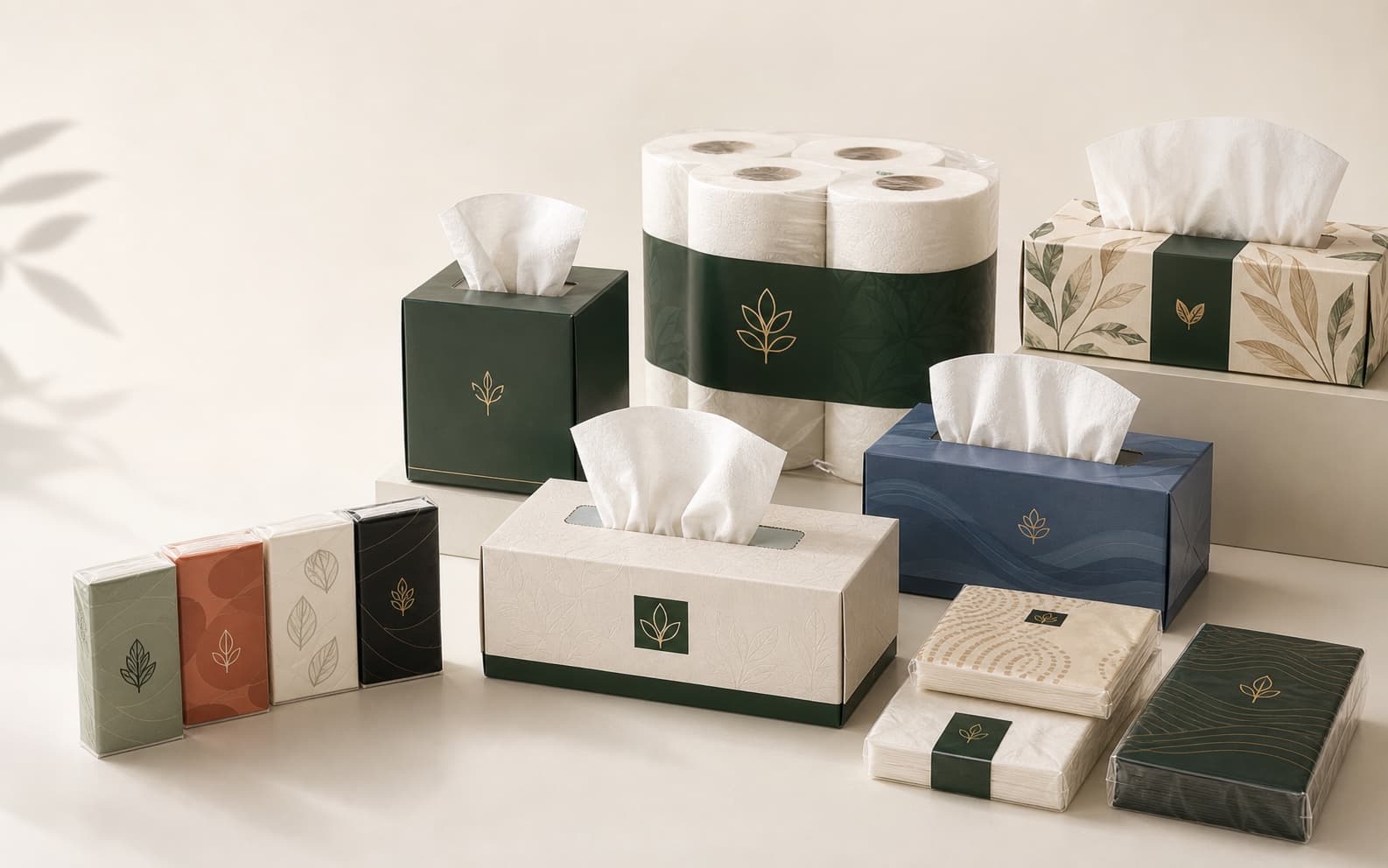
Side-by-side comparison
GSM and ply answer different questions.
Keep both fields visible. One describes basis weight; the other describes layer count.
- GSM
Grams per square metre
Describes
Mass per unit area, also called basis weight.
Written as
GSM or g/m², with the stated basis clarified.
Does not tell you
The ply count, finished thickness, softness, strength or absorbency by itself.
- Ply
Number of tissue layers
Describes
How many tissue layers form the finished sheet.
Written as
For example, 2-ply or 3-ply.
Does not tell you
The basis weight of each layer, finished sheet size, material or embossing by itself.
Clarify the GSM basis
Ask one question before comparing two specifications.
Is the stated GSM per ply or for the finished multi-ply sheet?
Why one label is not enough
The same headline label can still describe different tissue constructions.
Same ply, different specification
Two 2-ply tissues can differ in basis weight, sheet size, material, embossing, layer bonding and converting. The 2-ply label confirms only that the finished sheet has two layers.
Same GSM, different construction
A stated GSM does not identify the number of layers. When comparing specifications, confirm whether the stated GSM refers to each ply or to the finished multi-ply sheet. Even when GSM and ply match, sheet size, material, embossing and converting may still differ.
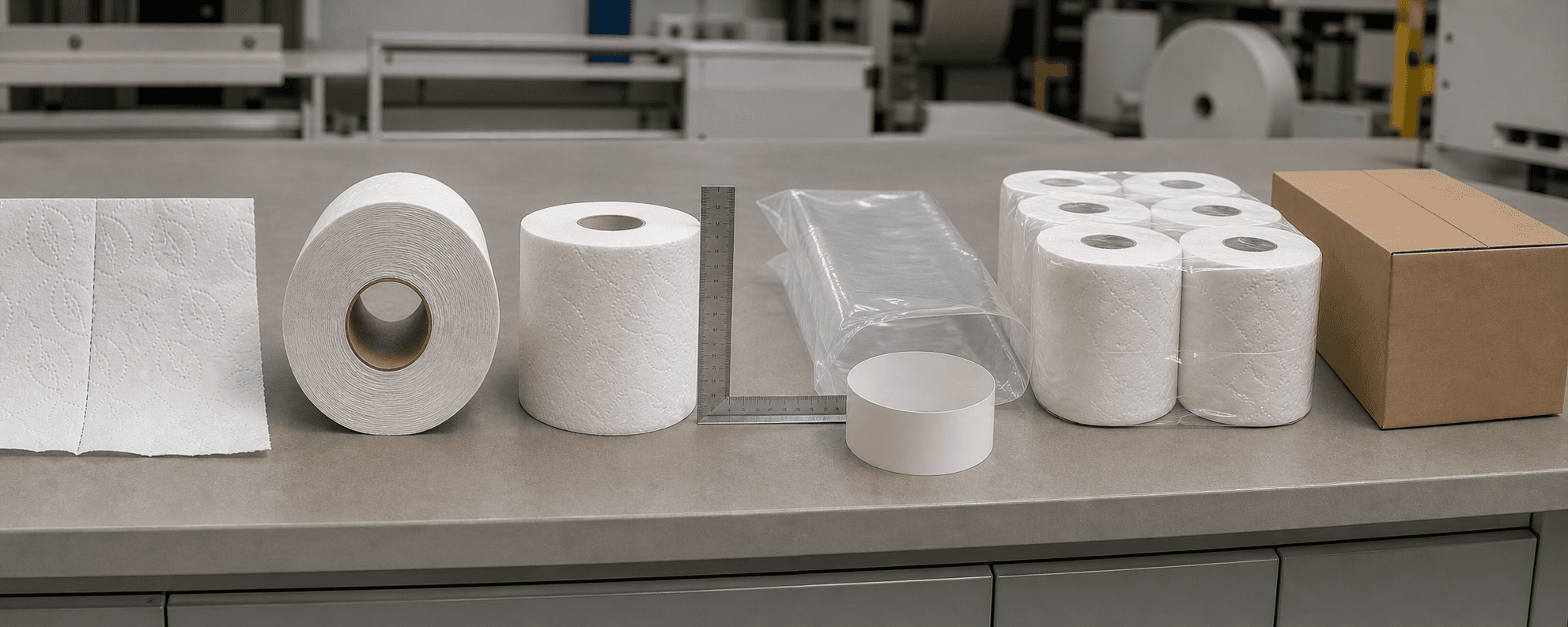
What buyers should compare
Record the fields around GSM and ply.
A useful comparison keeps basis weight, layer count and the finished product fields separate. Fill what you know and mark open points for review.
- Product
- Box facial tissue, toilet roll, paper napkin or another defined format.
- Ply
- Record the number of layers in the finished sheet.
- Target GSM / basis weight
- Write the requested mass per unit area and include the unit.
- GSM basis
- State whether the value applies per ply or to the finished multi-ply sheet.
- Sheet size
- Record width and length with the unit and product-specific orientation.
- Material requirement
- Include it when the project already defines a material requirement.
- Embossing
- Add the required embossing direction or a reference when relevant.
- Pack or sheet count
- Keep the finished count separate from GSM and ply.
- Reference sample or image
- Use it to clarify format and construction, not as a substitute for written fields.
Short RFQ template
Send GSM and ply as separate fields.
Do not hide both values inside a general quality label. Use the fields you know and leave the rest open for review.
Tissue specification template
- Product:
- Ply:
- Target GSM / basis weight:
- GSM basis: per ply / finished multi-ply sheet / open for review
- Sheet size:
- Sheet or pack count:
- Material requirement:
- Embossing:
- Reference sample / image:
Ready for a clearer specification
Keep basis weight and layer count clear.
TISVEN can review the product, ply, basis-weight wording, sheet size, embossing, count and reference you provide before quotation.