Toilet Roll Sample Guide
Toilet Paper Embossing for OEM Buyers: What to Confirm Before Sampling
Quick answer
Embossing is a visible converting feature, but “embossed” is not a complete OEM toilet-roll specification. Before sampling, record the visual reference, the expected appearance on the finished sheet, its relationship to the perforation and the supporting roll fields needed to review the sample.
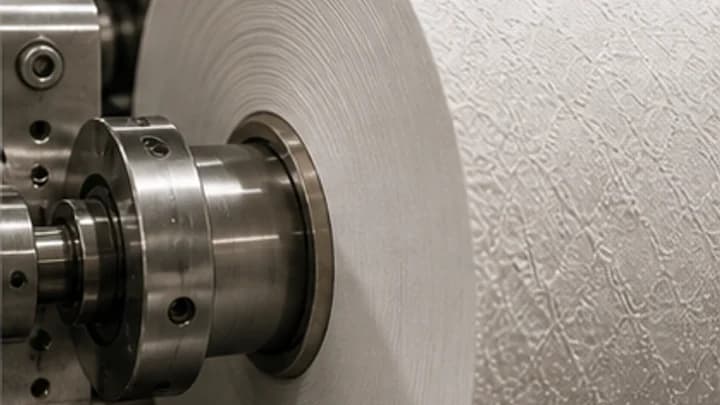
Start with one field
What embossing means in an OEM toilet-roll project
Embossing is the visible raised or recessed texture formed on tissue during converting. In an OEM project, treat it as one field of the finished-sheet appearance, not as a complete product description.
A reference photo or physical sample gives the buyer and supplier a visual target. The written brief should still state the surrounding tissue, sheet, roll and pack fields that will be reviewed with the sample.
Reference sample
What a buyer can confirm from a reference sample
Review what can be seen. Do not use the visible pattern to infer an unconfirmed process, tissue construction or performance result.
- 01
Pattern appearance
Compare the visible motif or texture with the reference. Describe what should be followed without assuming how the pattern was produced.
- 02
Pattern scale
Record whether the visible texture appears broad, fine or mixed relative to the finished sheet. A reference image is clearer than a general adjective alone.
- 03
Orientation and repeat
If these details are clearly observable, note how the visible pattern sits and repeats across the sheet.
- 04
Visible sheet texture
Review the surface appearance on an opened finished sheet, not only the outside of the roll.
- 05
Perforation relationship
Record where the tear line should sit in relation to the visible pattern, while keeping perforation as its own specification field.
- 06
Finished presentation
Check how the texture appears across the finished roll and whether the visible direction matches the approved reference.
Keep fields separate
What embossing does not tell you by itself
A visible texture can support sample comparison, but it cannot replace the rest of the approved toilet-roll specification.
Tissue construction
The visible pattern does not confirm GSM or ply. Record those as separate fields in the project brief.
Paper amount
Embossing does not confirm sheet count or total roll length. Use the approved roll specification for those values.
Finished roll dimensions
The pattern alone does not confirm roll width, outside diameter or core dimensions.
Performance or cost
Appearance alone does not prove softness, strength, absorbency, production cost or commercial value.
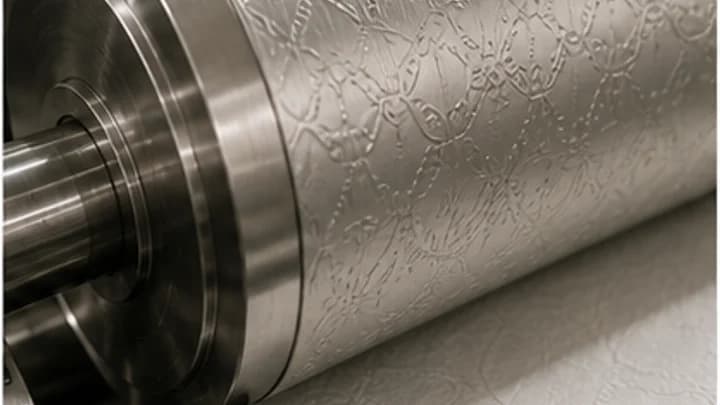
Two review fields
Embossing and perforation should be reviewed separately
Embossing describes the visible surface texture. Perforation defines the intended tear line between sheets. A buyer can show how the two should appear together on the finished sheet, while recording each requirement separately in the sample brief.
Keep the check practical: compare the visible texture with the approved reference, then confirm that the perforation sits in the intended sheet format. Do not treat one as proof that the other is correct.
Before sampling
How to prepare an embossing reference
Start with the fields you know. Mark unresolved fields for review instead of using a generic request such as “Please make embossed toilet paper.”
- Reference photo or physical sample
- Visible pattern direction to follow
- Areas of the pattern that matter most
- Ply
- GSM basis
- Sheet size
- Perforation reference
- Roll width and outside diameter
- Core
- Pack format
- Wrapper artwork status, if relevant
Sample review
What to review when the sample arrives
Use the approved reference and written brief together. These checks are visual and specification-based; they are not numeric quality tolerances.
- 01
Does the visible texture follow the approved reference direction?
- 02
Does the pattern appear visually consistent across the sheets reviewed?
- 03
Does an opened finished sheet look as expected?
- 04
Is the perforation placement consistent with the intended sheet format?
- 05
Does the finished roll match the rest of the approved specification?
Sample preparation
Example of a clearer OEM embossing brief
Fill in confirmed details and leave unknown fields open for discussion. The blank format avoids turning a sample reference into an assumed production specification.
OEM toilet roll embossing brief
- Product: Toilet Roll
- Embossing reference:
- Reference photo / sample:
- Ply:
- GSM basis:
- Sheet size:
- Perforation:
- Roll width:
- Roll diameter:
- Core:
- Pack format:
Final buyer takeaway
Approve embossing as part of the complete finished-roll specification.
Embossing is more useful when it is tied to a visual reference, the finished-sheet appearance, perforation and the supporting roll specification. TISVEN can review the information you provide before sample and quotation planning.