Box Facial Tissue / Packaging Materials
Tissue Box Paperboard: GSM, Thickness and What to Compare
Quick answer
If a tissue-box quotation lists only paperboard GSM, ask for the board type or grade, its thickness with units, the surface finish, and a sample that represents the proposed construction.
If stiffness figures are supplied, confirm the test method and direction before comparing them.
GSM describes weight per unit area—not thickness or a guarantee of box quality. There is no single paperboard GSM that should be recommended for every facial tissue box.
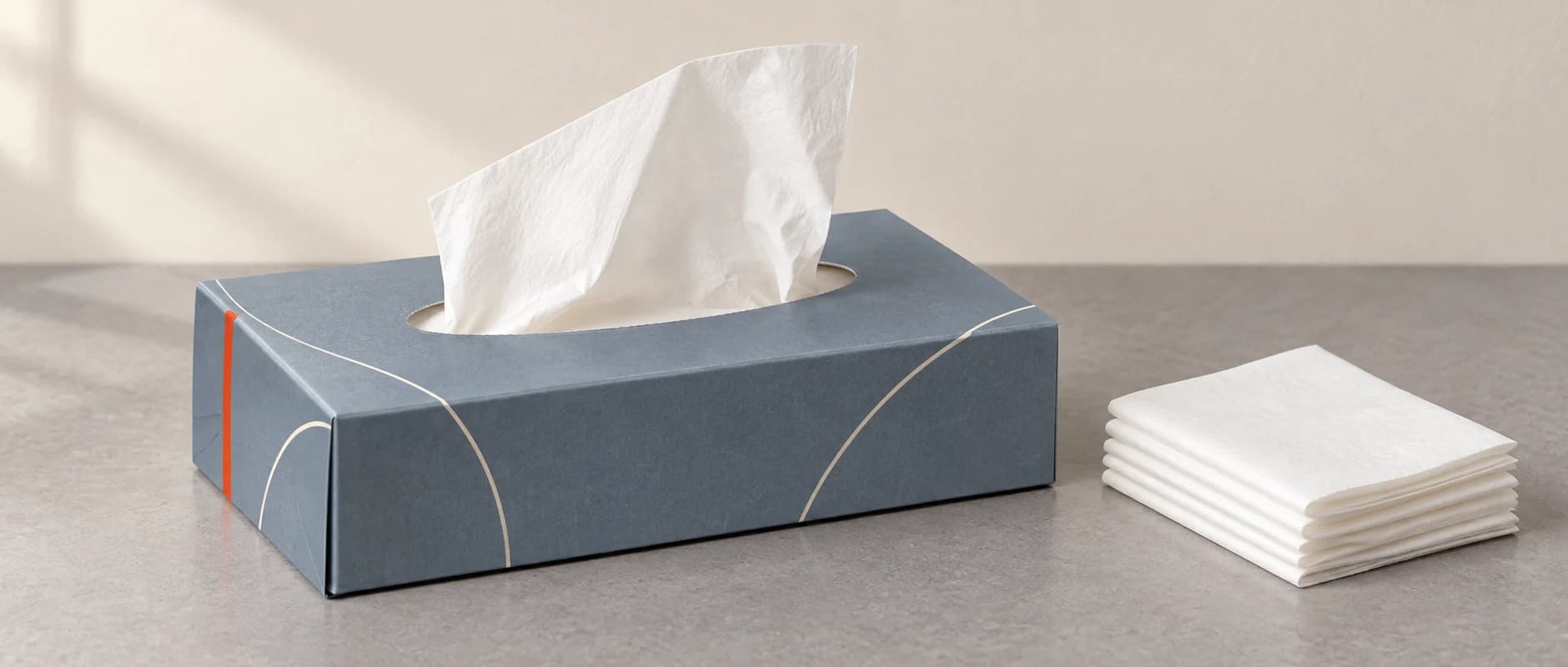
This guide concerns the folding paperboard box around facial tissues, not the tissue sheets, a reusable dispenser or the shipping carton.
01 / Read the material, not just the number
Three different properties—not three names for thickness
Grammage
GSM / g/m²The paperboard’s mass per unit area.
Does not establish its thickness or the suitability of the finished box.
Thickness
µm / mm / pointsThe distance between the board’s two surfaces, also called caliper.
Does not establish its bending stiffness or the performance of an assembled box.
Bending stiffness
Method + directionHow the board resists bending under specified test conditions.
Does not provide a complete assessment of the finished tissue box.
Concept diagrams—not measurements. Cross-section thickness is exaggerated for clarity; no internal layers are specified.
Holmen’s technical information treats grammage, thickness and stiffness separately. Its stiffness reporting distinguishes machine direction (MD) from cross direction (CD), and identifies the measurement method. Compare like-for-like figures, not numbers with different methods or units. Holmen technical reference ↗
Here, GSM refers to the outer box material. For the tissue inside, see GSM vs Ply in Tissue Paper.
02 / What the quotation needs to say
What is missing from a GSM-only quotation?
Start with three short questions.
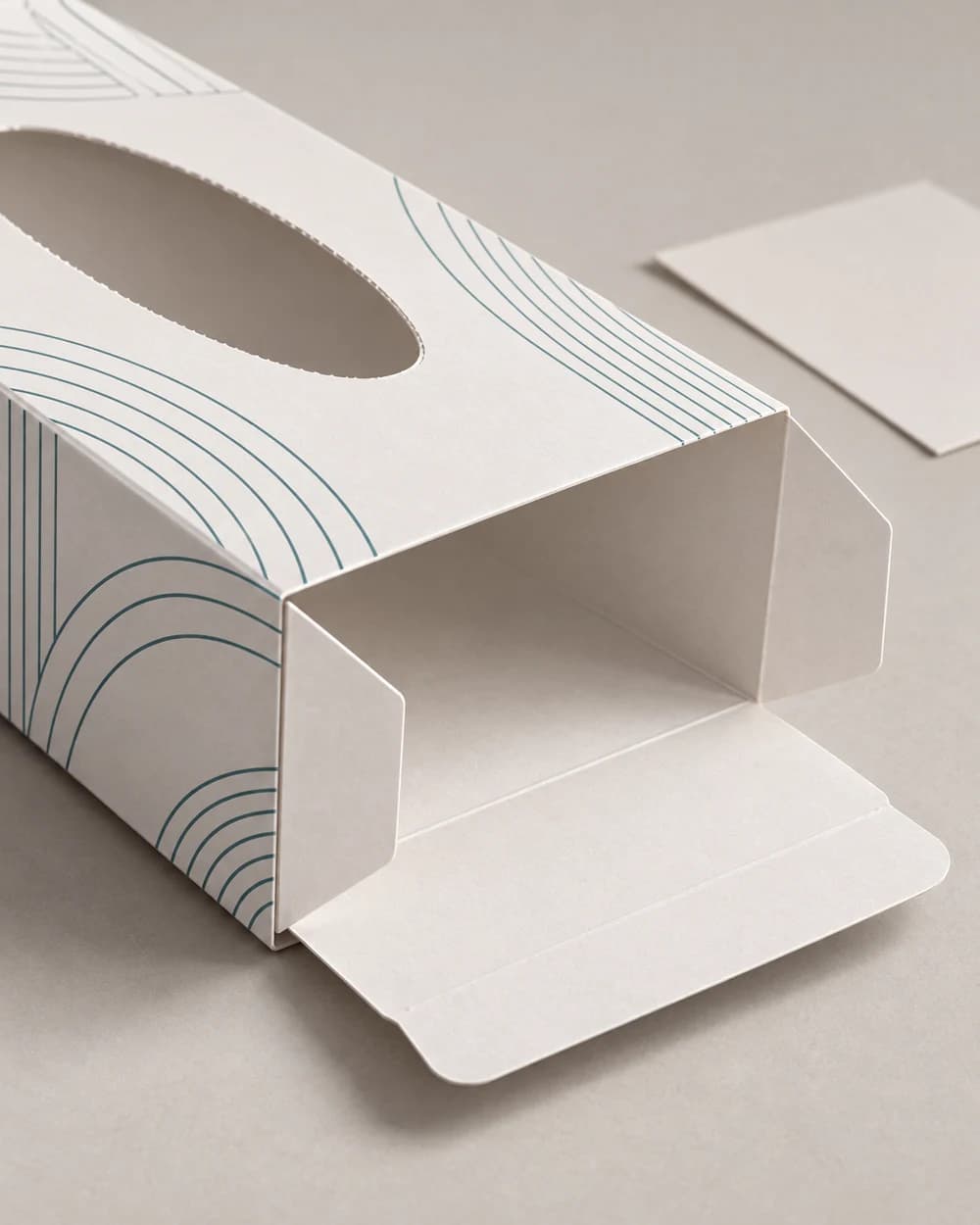
Which paperboard does the number describe?
Ask for the material description and, where available, the manufacturer’s grade or supplier material reference.
Also clarify whether the stated grammage describes the supplied paperboard or the finished material after additional treatments. Do not assume that two quotations with the same GSM describe identical materials.
What thickness and finish are being proposed?
Request thickness with its unit. Confirm whether that figure applies before or after any additional film lamination or other finishing.
A description such as ‘matte’ is not enough to identify the treatment. Ask whether it means matte film lamination, a coating or another specified finish.
Which sample represents that specification?
Ask the supplier to identify the sample that matches the proposed board and finish.
If the available sample uses a different material, record the difference. It can remain a reference, but it should not silently become approval of the proposed box.
03 / Same number, incomplete comparison
Same GSM? Keep the comparison open
| Quotation information | Quote A | Quote B |
|---|---|---|
| Paperboard GSM | Stated | Same stated GSM |
| Material reference | Identified | Not identified |
| Thickness and unit | Stated | Not stated |
| Surface finish | Specified | Described only as ‘matte’ |
| Sample relationship | Supplier identifies it as matching the proposal | Not confirmed |
This does not prove Quote A is the better product. It shows that Quote B needs clarification before the materials can be compared.
Likewise, a higher GSM should not become an automatic upgrade decision. Ask what material changes, what the finished sample demonstrates, and whether those changes serve the intended box.
04 / From material to the assembled box
Check the assembled box—not just the flat material
For a practical buyer review, compare assembled samples of the same intended box format, with the proposed tissue fill where available.
Look at whether the panels sit as intended, the folds close neatly, and the opening remains usable during dispensing. Record specific observations rather than simply writing ‘stronger’ or ‘better.’
This is a suggested comparison method, not a TISVEN laboratory procedure or a substitute for agreed performance testing.
Keep material review separate from tissue box dimensions. For the wider review of dispensing, assembly and printed appearance, use the OEM Box Facial Tissue Sample Guide.
05 / Make the missing details explicit
A short clarification you can send
Please confirm the paperboard type or grade, GSM, thickness and unit, and the proposed surface finish. Please clarify whether the figures apply before or after additional finishing, and identify which sample represents the proposal.
If stiffness data is available, please include the test method and MD/CD values. Please also note any differences between the available sample and the material being quoted.
Discuss your facial tissue box
Share your current box specification or reference sample, and point out the material detail you need clarified.